Regulatory Readiness for Medical eVTOL Operations in India: What Comes First
Navigating the DGCA’s VCA framework is the first step for aeromedical pioneers. Learn why Design Organisation Approval (DOA) and Type Certification are the foundation of India’s flying ambulance future.
To achieve regulatory readiness for medical eVTOL operations in India, the absolute first priority is securing Design Organisation Approval (DOA) and submitting a Type Certification (TC) application under the DGCA’s new "Vertical Take-off and Landing Capable Aircraft (VCA)" framework. While infrastructure and pilot training are critical, the aircraft itself must first be certified as airworthy under Rule 133A of the Aircraft Rules, 1937, ensuring it meets rigorous safety and structural standards equivalent to global EASA SC-VTOL benchmarks.
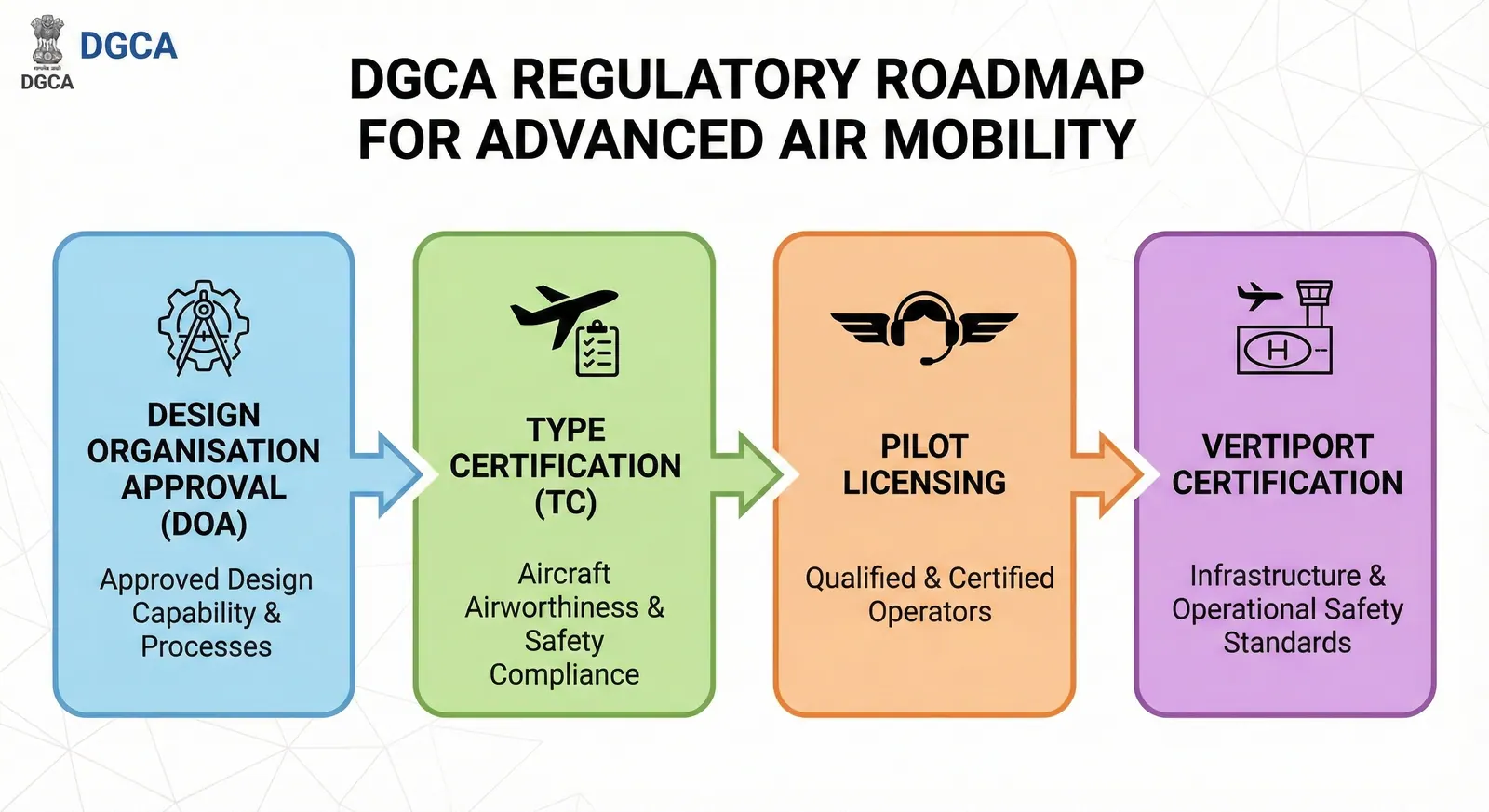
The Three Pillars of Indian AAM Regulation
The Directorate General of Civil Aviation (DGCA) has moved from skepticism to active facilitation, creating six specialized working groups to manage the ecosystem[cite: 2, 3]. For a dedicated medical provider like Dragale Aviation, readiness is divided into three pillars:
1. Aircraft Certification (The VCA Framework)
The DGCA’s "Guidance Material on Type Certification of VCA" provides the legal pathway for eVTOLs.
- Design Organisation Approval (DOA): This is a mandatory moat. Competitors like Nalwa Aero have already secured this, while others are at least 18 months into the process[cite: 3].
- Safety Redundancies: For medical missions, the DGCA requires proof of Distributed Electric Propulsion (DEP) and robust Battery Management Systems (BMS) to ensure the aircraft can land safely even if a motor fails.
2. Infrastructure (The Vertiport Challenge)
Medical eVTOLs cannot rely on traditional airports; they need a "last-mile" connection.
- Hospital Integration: Major institutions like Manipal and Mahatma Gandhi Hospitals in Jaipur have trauma capabilities but lack the high-voltage (400V/800V) charging infrastructure required for eVTOLs.
- Standardization: The DGCA is currently developing standards for rooftop vertiports, specifically focusing on landing protocols in dense urban medical zones[cite: 2].
3. Crew & Licensing (The Powered Lift Category)
Unlike traditional helicopter pilots, eVTOL operators will likely require a specialized "Powered Lift License". This license accounts for the unique fly-by-wire flight characteristics and the simplified cockpit management of aircraft like the AyuRatha DX1.
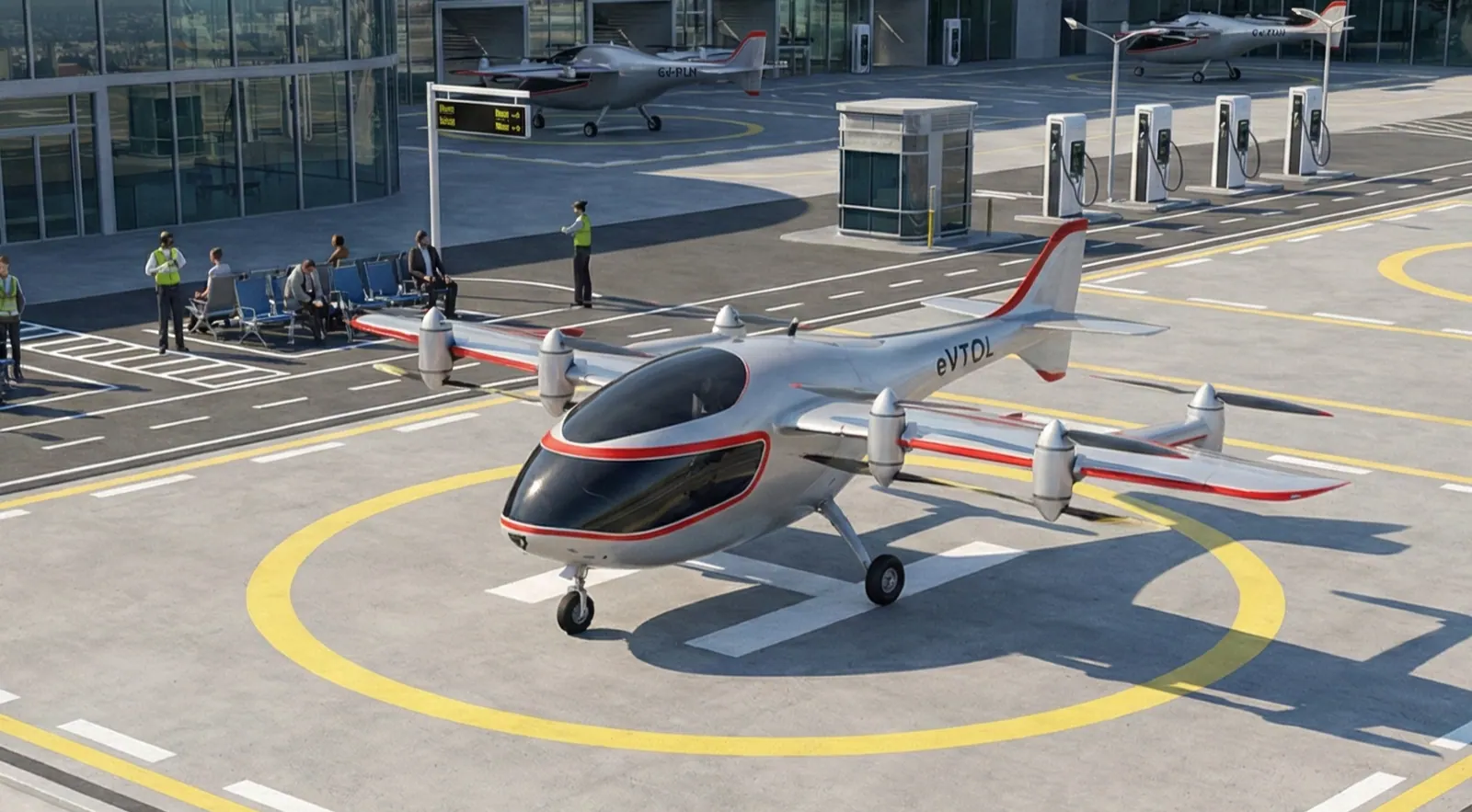
Why Medical Certification is Different
Writing for a "Medical-First" niche gives Dragale a unique regulatory lever. The DGCA may fast-track certification for eVTOL ambulances due to their high public health utility and "mission-critical" nature[cite: 2].
- Medical Suite Validation: Unlike passenger taxis, the AyuRatha must certify its onboard medical equipment (ventilators, monitors) for electromagnetic compatibility with the aircraft's avionics.
- Vibration Standards: Regulatory approval for EMS flight requires meeting specific vibration dampening thresholds to protect patients with spinal or traumatic injuries during high-speed transit.
Timeline: When Will Trials Begin?
The Indian government is committed to starting commercial air taxi and ambulance trials by 2026 in hubs like Delhi and Mumbai[cite: 2]. For regional players in the Jaipur-Delhi corridor, the window to secure initial Letters of Intent (LOIs) and start the 18-month certification clock is closing fast.
FAQ: Navigating DGCA Compliance
What is Rule 133A, and why does it matter?
Rule 133A of the Aircraft Rules, 1937, is the legal foundation that allows the DGCA to issue special "Vertical Take-off and Landing Capable Aircraft" (VCA) certifications. It separates eVTOLs from traditional helicopters, allowing for more tailored safety and operational standards.
How much does DGCA certification cost?
While the base application fee for an aircraft over 1000kg is approximately INR 4 Lakhs, the total compliance cost—including flight testing hours, material validation, and consulting—can range from INR 15 Cr to 40 Cr ($2M–$5M USD).
Can hospital rooftops be used as landing pads immediately?
No. Every landing site must be certified as a "Vertiport" or "VCA-capable Helipad" by the DGCA. Hospitals must partner with OEMs like Dragale Aviation early to ensure their rooftop structural integrity and electrical grids meet the incoming standards.
Related posts
- Why Road Ambulances Alone Can’t Solve India’s Emergency Response CrisisIndia’s road congestion is a humanitarian tax on the "Golden Hour." This article explores why ground-based EMS is failing and why Jaipur-based Dragale Aviation is building a dedicated aerial bypass.
- eVTOL Air Ambulance vs Helicopter EMS: A Mission-by-Mission ComparisonHow does the AyuRatha eVTOL stack up against traditional helicopters? We compare operational costs, noise profiles, and specific medical mission outcomes.
- Why India Needs Dedicated eVTOL Air Ambulances (Not Just Air Taxis with Stretchers)India’s emergency healthcare challenge cannot be solved by retrofitting passenger eVTOLs. This article explains why medical-first eVTOL air ambulances are a fundamentally different and necessary category.